
I was just writing a response on a message board, and found myself typing, “In theory, the publisher can…”
Not a shocking phrase, really, except that I used “in theory.” This is a verbal tic that I’m told I use a lot.
I think the reason is that it’s a round-about way of making suggestions without being bossy or strident–just a way of putting the idea out there without being pushy. (“You know, in theory, if you open the lid first, it’s easier to get the peanut butter out.” Or, “In theory, you could just call and ask…“)
But REALLY, it’s a Pet Phrase.
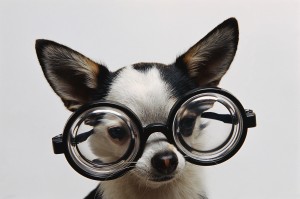 You know the kind I mean. The word or expression that slips out of your mouth every third sentence. “You know,” can be one.” Or constantly using “Dude.” I know that I throw the word “really” into far too many of my own sentences. I can’t quite help myself. It’s a pet.
Like any pet, Pet Phrases are comfortable, familiar, soothing–like scratching your dog’s ears when you’re stressed, or the way your hand automatically reaches for fur when you’re trying to concentrate. Pet phrases can help ease things along, provide comfortable places to end the sentence, like ending a day on the couch with your pet stretched out across your lap. “It’s been a long time since I started this article, you know.” The very fact that your pet is there when you need it makes it nice to have around. Friendly.
Or Lazy. The dangerous thing about having Pet Phrases isn’t that you use them; it’s that you get so comfortable with them that you not only use them too much, but that you’re not using anything else.You become so complacent with how your pet phrase sums everything up (“yadda yadda yadda”), you stop trying, stop actually working at your writing.
You’re no longer just ending your day on the couch, you’re there all the time.
It’s true that pets like routine. They need regular attention to keep them happy and healthy, to keep them from becoming spoiled monsters. There’s nothing actually wrong with having and using a Pet Phrase (as long as it’s not an objectional one, of course).
What you have to beware is your Pet Phrase becoming the kind of spoiled monster that wreaks havoc when you try to leave it alone in the house, or that makes your guests uncomfortable when they visit.
If I were using “in theory” in every paragraph of this article, it would become obnoxious. It would be drawing attention to itself so that you were paying more attention to IT than you were to what I was trying to say, like a spoiled cat jumping in your lap (even though you’re allergic) with your host not even trying to shoo the cat away.
A well-mannered Pet Phrase can help move things along, and (in theory), makes the visit pleasant for everyone. But an intrusive, ill-mannered, Pet Phrase that’s in your face constantly is just going to make life miserable … and a miserable reader or client is NOT going to come back for more abuse from your Pet Phrase, no matter how cute it is.
Do you want to spend all your time apologizing for your Pet Phrase’s misbehaving?
Of course you don’t! So, get training for your badly behaved Pet Phrases now!
“Sit, In Theory, Sit! Good phrase!“
Hi Deb, First off, great picture! I’m a “really” offender in speech and print, which really irks me when I notice it, but even when editing my own copy, the word is invisible to me. Strange, isn’t it? One way to overcome the pet phrase problem is to listen to yourself on tape. Tends to drive the point home. Really.
Brad Shorr’s last blog post..Is Your Company Ready for Social Media Marketing?
Or to have handy friends and family point these things out to you, you know? In theory, at least!
Oh boy, I have lots of pet phrases. That’s why I like communicating in writing – my speech is peppered with “you know,” “like,” “hella,” and yes, the occasional “dude.” I’m a Cali valley girl. What can I say?
There are some things you just can’t help!
Excellent point, Deb. Another thing is our pet mistakes. I’m notorious for leaving out words, especially not. NOT a very good thing to do. 🙂
I’ve awarded you the Premio Dardos Award. You can read the details on my blog.
Lillie Ammann’s last blog post..The Premio Dardos Award
Nice trope, Deb. I’m reminded of Orwell’s device to rid oneself of a particularly loathsome construction: “The not unblack dog chased the not unsmall rabbit across the not ungreen field.”
I’ve recently took on the task of eliminating the word ‘like’ from my vocabulary – unless appropriate, of course. Since that was going so well I decided to extend the project to include my sister and her daughter. Eliminating that Pet Phrase from my niece’s sentences is going to be my greatest achievement – how do you explain to a five-year old what the word ‘like’ really means without saying the word itself? Thanks for the post.
Paulina Riera’s last blog post..10 Steps to Sharing and Protecting Yourself on Facebook
It’s HARD getting rid of verbal tics … and trying to explain how without using the word is even harder. Good luck with that!
My other tick, which manifest itself in my writing, is the misspelling that occurs when my fingers and my mind work at different speeds – as visible in the last post. Yikes! “I’ve recently took” should have been “I recently”.